Never pass up a chance to sit down or relieve yourself. -old Apache saying

Tuesday, March 22, 2016

40% from rooftop solar

The National Renewable Energy Lab (NREL), a unit of the U.S. Department of Energy, now estimates that up to 40% of total energy needs could be satisfied by only placing solar panels on "suitable" rooftops. And that doesn't count the extra 10 panels you could have in your backyard, or the extra energy you could generate with a wind turbine or two.

Renewables are here to stay, and the costs continue to drop while efficiency continues to climb. It's no longer sensible to pull all that carbon fossil fuel (petroleum, natural gas), out of the ground, especially when the hemp plant can do most of the things petroleum can do for less financial and environmental cost. 

With Solar, U.S. Rooftops Could Provide Nearly Half Of Nation’s Power

The U.S. Department of Energy’s National Renewable Energy Laboratory (NREL) has almost doubled its previous estimate of the total U.S. technical potential for rooftop solar photovoltaic (PV) systems and has found that U.S. building rooftops could generate close to 40% of national electricity sales.
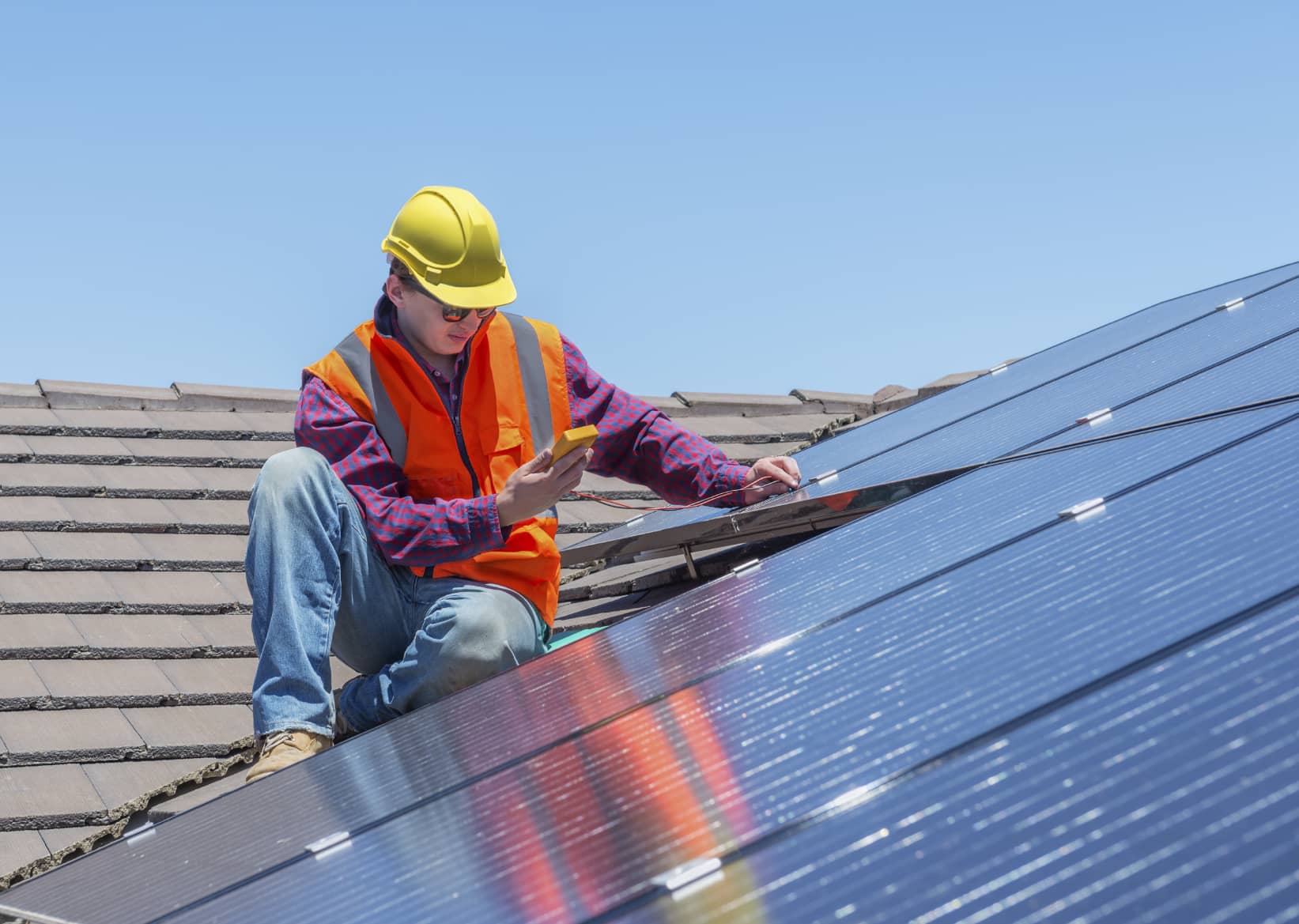
NREL says its analysts have used detailed light detection and ranging data for 128 cities nationwide, along with improved data analysis methods and simulation tools, to update its estimate. The analysis appears in a new report that quantifies how much energy could be generated if PV systems were installed on all suitable roof areas in the continental U.S.
The analysis reveals a technical potential of 1,118 GW of capacity and 1,432 TWh of annual energy generation, equivalent to 39% of the nation’s electricity sales. That is significantly greater than that of a previous NREL analysis, which estimated 664 GW of installed capacity and 800 TWh of annual energy generation.
Analysts attribute the new findings to increases in module power density, improved estimation of building suitability, higher estimates of the total number of buildings, and improvements in PV performance simulation tools.
Within the 128 cities studied, the researchers found that 83% of small buildings have a suitable location for PV installation, but only 26% of those buildings’ total rooftop area is suitable for development. Because of the sheer number of this class of building across the country, however, small buildings actually provide the greatest combined technical potential. Altogether, NREL says small building rooftops could accommodate up to 731 GW of PV capacity and generate 926 TWh per year of PV energy – approximately 65% of the country’s total rooftop technical potential.
“It is important to note that this report only estimates the potential from existing, suitable rooftops, and does not consider the immense potential of ground-mounted PV,” adds Robert Margolis, NREL senior energy analyst and co-author of the report. “Actual generation from PV in urban areas could exceed these estimates by installing systems on less suitable roof space, by mounting PV on canopies over open spaces such as parking lots, or by integrating PV into building facades. Further, the results are sensitive to assumptions about module performance, which are expected to continue improving over time.”
NREL says its work was supported by funding from the Energy Department’s Office of Energy Efficiency and Renewable Energy in support of its SunShot Initiative, a collaborative national effort to make solar energy fully cost-competitive with traditional energy sources before the end of the decade. Through SunShot, the department supports efforts by private companies, universities and national laboratories to drive down the cost of solar electricity to $0.06/kWh.
The full report, titled “Rooftop Solar Photovoltaic Technical Potential in the United States: A Detailed Assessment,” is available here.


Monday, March 21, 2016

Joe Satriani

Joe plays "Summer Song" in this video from a few years ago. 

Dammit, I just realized that Joe Satriani came thru Houston two weeks ago at the House of Blues.  I noticed the scheduling a few months ago and then just fucking forgot. Damn this advancing age! 

Joe has a new collection out called "Shockwave Supernova" which has a lot of good stuff on it. Joe seems to be slowing down just a bit and that's just fine with me. It happens.

Sunday, March 20, 2016

946 pounds of weed

946 pounds of weed in the dunes.
946 pounds of weed.

Fish one out
Pass it about
945 pounds of weed in the dunes.


Game Wardens find over 900 pounds of pot on Island

Texas game wardens, including the Maritime Tactical Operations Group, today unearthed more than 900 pounds of marijuana that was hidden among the sand dunes of South Padre Island.
While patrolling the coastline between beach access points 5 and 6, game wardens noticed heavy foot traffic leading from the water’s edge to the dunes. After a quick search of the area, several partially buried, plastic-wrapped packages were located. Further investigation led to the discovery of more than a dozen bundles of drugs buried in the sand. In total, 946 pounds of marijuana were seized.
With thousands of people flocking to the island for spring break and Semana Santa (Holy Week), Texas Game Wardens have increased their presence in the area, working alongside the United States Coast Guard and Customs and Border Protection Marine Interdiction Agents to assist with security efforts. This is one of the larger seizures for the department this year. The marijuana has been turned over to federal investigators with the Department of Homeland Security.

Oh, what a waste!

Saturday, March 19, 2016

War on Drugs a lie

Although we suspected as much, it's frustrating and enraging to see that the War on Drugs was deliberate bullshit initiated by those good, upstanding Republicans to control the blacks and left-wingers, read: hippies.

The whole goddamn War on Drugs has been a farce. Too bad about all those lives ruined. 

Yet another reason to detest the Republicans, unless you're a racist, of course.


Dan Baum, writing in support of drug legalization at Harper’s, has unleashed a frank 1994 quote from former Nixon policy advisor John Ehrlichman, and as inadvertently salient an argument for legalizing drugs as any I’ve ever seen:
At the time, I was writing a book about the politics of drug prohibition. I started to ask Ehrlichman a series of earnest, wonky questions that he impatiently waved away. “You want to know what this was really all about?” he asked with the bluntness of a man who, after public disgrace and a stretch in federal prison, had little left to protect. “The Nixon campaign in 1968, and the Nixon White House after that, had two enemies: the antiwar left and black people. You understand what I’m saying? We knew we couldn’t make it illegal to be either against the war or black, but by getting the public to associate the hippies with marijuana and blacks with heroin, and then criminalizing both heavily, we could disrupt those communities. We could arrest their leaders, raid their homes, break up their meetings, and vilify them night after night on the evening news. Did we know we were lying about the drugs? Of course we did.
I must have looked shocked. Ehrlichman just shrugged. Then he looked at his watch, handed me a signed copy of his steamy spy novel,The Company, and led me to the door.
That drugs have been used as a tactic to marginalize and imprison peoples who are inconvenient, so to speak, for conservatives and neo-cons doesn’t really come as a surprise—and not just because Nixon was a noted racist. The War on Drugs was a Nixon invention but, as Baum explains, it’s been useful for every president thereafter, and its function as a suppressive tool didn’t exactly wane—recall the way it defined Reagan’s crack era, which was funneled into black neighborhoods by the CIA and then used to decimate an entire generation. Or the way relatively minor drug offenses are the main contributor to the current mass incarceration crisis, which disproportionately affects young black and brown men.
Adjacent to this, Baum lays out a clear and logical argument for the way legalization could work, using Portugal and the Netherlands as precedents, and advocating for it to remain in the control of the state—a “state-run monopoly”—rather than free markets, lest addiction become a market incentive the way it has with alcohol and cigarettes. (Of course, the deeper problem of racial prejudice remains strong in this scenario too—the legal weed market has already locked out people of color to a dramatic and unfair degree, and black people are much more likely to be arrested for pot-related offenses even in states where it’s legal.) Baum cites the way marijuana is regulated in his home state of Colorado (of course this dude is from Boulder), but also makes the case that weed is the path to killing the drug war, in its capacity as an admitted racist and antiliberal Nixonian tool:
The citizens of the U.S. jurisdictions that legalized marijuana may have set in motion more machinery than most of them had imagined. “Without marijuana prohibition, the government can’t sustain the drug war,” Ira Glasser, who ran the American Civil Liberties Union from 1978 to 2001, told me. “Without marijuana, the use of drugs is negligible, and you can’t justify the law-enforcement and prison spending on the other drugs. Their use is vanishingly small. I always thought that if you could cut the marijuana head off the beast, the drug war couldn’t be sustained.”
Read the whole piece here.

Friday, March 18, 2016

Thursday, March 17, 2016

pot is booming

When is Texas going to get off of its right-wing moralizing ass and legalize marijuana?  Or at least pass a medical marijuana bill that can be used by more than 0.01% of Texans. Texas is passing up BILLIONS and BILLIONS in additional revenue because there are too many religious Neanderthals in this state.

Legal Pot Outsold Girl Scout Cookies in 2015

With marijuana now legal in over 20 states, the pot industry is booming. In 2015, nearly $3.5 billion in profits have been reported. However, smokers suffering from the munchies didn't turn to Girl Scout cookies to fulfill their cravings, as that classic American snack generated only $776 million in sales last year.
According to Quartz, the trade publication Marijuana Business Daily estimates that for every $1 spent on pot, the surrounding economy gains $3, including supply purchases to grow the plants, including lights, fertilizer, etc. Profits into the tens of billions of dollars are projected for local economies in these states that have legalized the recreational drug over the next four years.
With all of this profit-potential swirling about, Girl Scouts have taken to selling their cookies outside of pot dispensaries. Unfortunately, they can't seem to compete with other snack products like Funyuns or Doritos brands which brought in an astounding $4.9 billion in 2015.

remember

remember

deja vu

deja vu

indeed

indeed

Delete Fox "News"

Delete Fox "News"

Probably

Probably